

Nowadays I get to spend some time with a baby I love. He is at the age where he is exploring his hands and feet, everything goes into the mouth and everything is watched. When I talk to him he studies my face as if it were the most important text in the world, and for him it is. At this age a human brain forms more than a million new neural connections every second, and much of what that baby is learning comes from faces: a frown, a smile that reaches the eyes, the small tightening around an adult’s mouth when she is worried. He is becoming very good at reading people, because that is what humans are built to be good at.
I think about him when I think about AI, which is most days.
I should say first that AI has been good to me. I get to do so much more than I could a few years ago. I research faster, and I can test an idea in an afternoon that used to take me weeks. I feel that I can build anything and I build much more than I have ever done in my life. Some days it feels as if I have been given wings.
It is also changing me, and I find it very hard to see how. We humans get caught up in how our heads work here and now. Convenience is a powerful force, and it wins against long-term thinking almost every time, because the reward is immediate and the cost arrives later and somewhere else that I don’t think about in the here and now. I notice myself reaching for the tool before I have finished a thought. I can also notice that some kinds of effort feel heavier than they used to. What I cannot see is what that adds up to over five years, or over a generation.
There is a fatigue everywhere I look. In the people I meet, in the newspaper and in my LinkedIn feed, behind all the posts and all the announcements, I can feel people getting tired. Even behind all those posts that seem optimistic and excited. Nobody was looking for AI to save them. We already had problems, and many of them were caused by the previous waves of technology.
I was excited when social media arrived twenty years ago, as most of us were. Nobody at that point could picture what it would do to our attention and to the foundations that had been built over generations for healthy liberal democratic societies, including the way a society had been built to argue with itself. Then came the pandemic, and a generation that spent its formative years working and learning through screens. We have discussed at length how that changed Generation Z, how they relate to other people and how comfortable they are reading faces and body language. Those are the very things the baby on my lap is working so hard to learn, and the things humans used to be best at.
What is coming now is far bigger than social media, and it worries me a great deal.
Years ago I read Yuval Noah Harari’s Sapiens. As I remember it, his explanation for why humans came to dominate the planet rests on something unique to us. We can cooperate flexibly in very large groups, because we can believe together in things that exist only in our shared imagination, such as money, nations, laws and gods. Abstract thought made large-scale collaboration possible, and collaboration let us shape the world around our needs and wants.
This is what I keep returning to. If the abilities that made us human are the ones we are now handing to machines, our thinking and our language included, what happens to us in the process? Every time we move a capability outside ourselves, we empty out a little of what was inside. I worry less about machines becoming like us than about us becoming less like ourselves, less practised at talking to each other and at working out a problem together.
If all of that is put outside us, what is left?
Arundhati Roy published an essay this month called “Apocalypse Now and Then”, and I think everyone should read it. Much of it is about power: the companies building AI, their closeness to states and who ends up paying. One image from it has stayed with me since I read it.
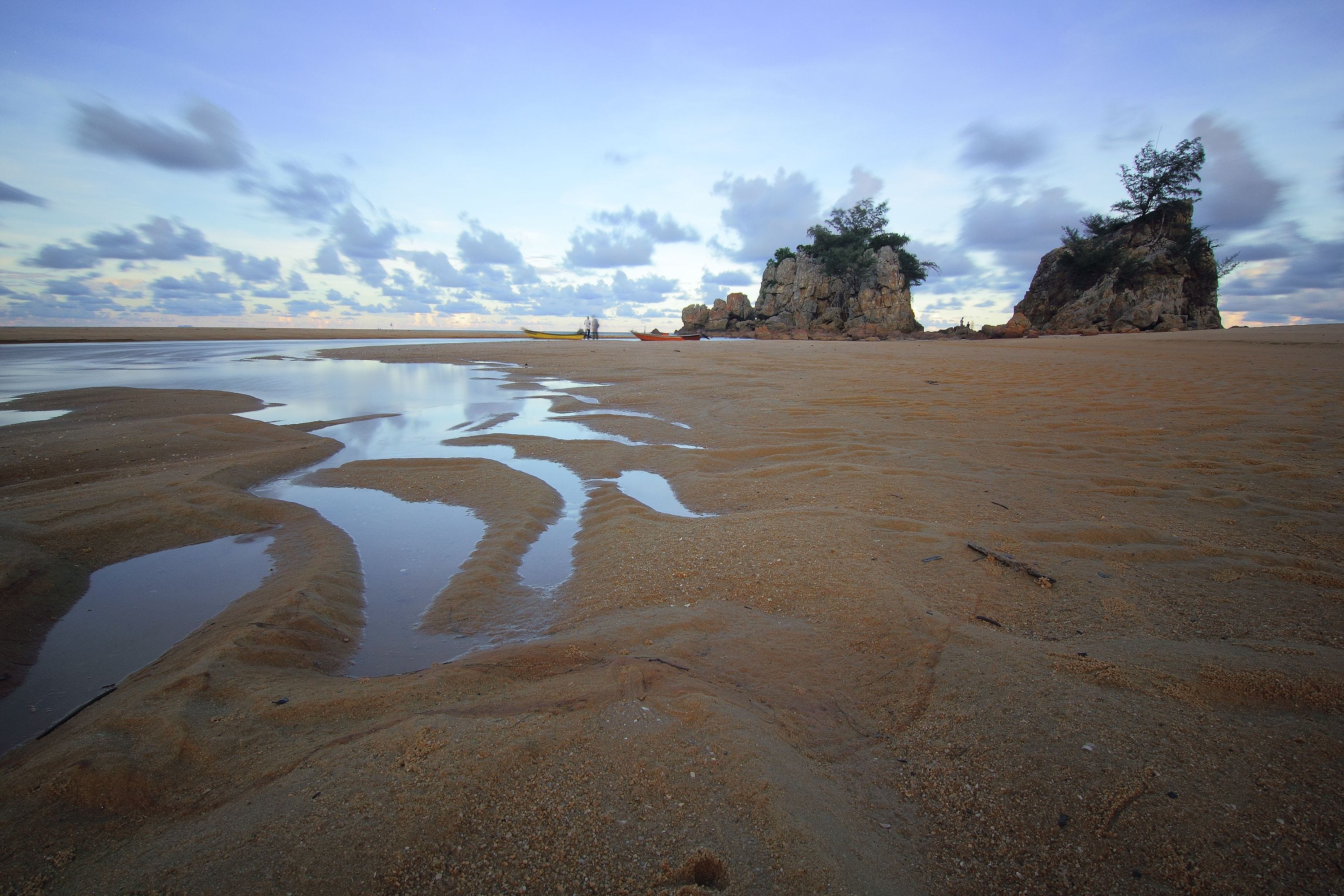
On the morning of the 2004 tsunami, before the wave reached the coasts of Thailand and Indonesia, the sea pulled back. People walked out onto the exposed sand to look, and the beaches had never looked so beautiful. Nobody could know that the water was building into a wall further out, and that it would come back and catch them unprepared. Roy’s line is short: “We’re in that moment now.”
I remember that tsunami well, and I could picture the scene immediately. I could also picture myself in it, walking out to admire the view.
One response to all this is to wait and see. It sounds reasonable, even humble. I have come to think that waiting and seeing is itself a choice, and that it leaves the outcome in the hands of others. The people walking out on the beach were waiting and seeing.
Waiting to see what happens is a way of letting others decide what happens.
In my work with founders I talk about the commitment window, the period just before you commit people, time and money to something you have not proven, when being wrong is still cheap and nobody is in the mood to look closely. I think humanity is standing in one now. We are committing our attention and the skills that made us human to something nobody has tested, and this window is closing faster than any I have seen.
This is where my Indian upbringing wakes up. I have argued with friends about whether we have free will at all, and lately the question feels less abstract. When I look at myself honestly I see a convenience-oriented, short-sighted human, caught up in the excitement with a knot of anxiety building in my stomach. I know what I think we should do, and I do not do it. I let it happen, and so do we all.
If the whole of humankind is moving toward something it cannot stop, it starts to look predestined. I think of the Trinity behind ancient Hindu thought, with Brahma who creates, Vishnu who preserves and Shiva who destroys so that creation can begin again. Are we moving toward a destruction that clears the ground for a fresh start, once more, in a cycle?
I do not have an answer. I have two things I keep holding against each other.
The first is that Roy, looking at the same wave, ends her essay with a call to act. The second comes from the same tradition that gave me the cycle. In the Bhagavad Gita, Arjuna stands on the battlefield and wants to put down his bow, because he cannot see a good outcome. His mentor Krishna does not tell him the outcome is fixed and he may as well rest. He tells him to act, and to let go of his attachment to the result. Between creation and destruction stands Vishnu, whose whole work is to hold things together for as long as they can be held.
I think I am writing this because I do not want to be one of the people walking out on the beach. I do not yet know what I will do differently. What I do know is that the baby will learn what a human face means from the people around him, and I want to be someone he can still learn it from.
Arundhati Roy, “Apocalypse Now and Then”, EQUATOR, 15 October 2026: